
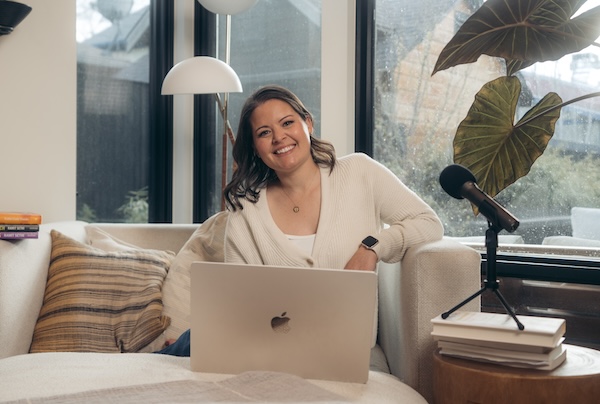
44. How Much House Can You Really Afford? What the Bank Won't Tell You About Buying A Home
Listen on Apple | Spotify
How Much House Can You Really Afford? It's Probably Less Than the Bank Says.
Buying a home is one of the biggest financial decisions you'll ever make. It's exciting, emotional, and for many people it represents stability, success, and a dream they've worked toward for years. But I also think it's one of the purchases where we ask ourselves the wrong question.
Most people start by asking, Can I afford the monthly payment? They plug numbers into mortgage calculators, get pre-approved by a lender, and start shopping for homes at the very top of their budget. The problem is that a mortgage payment only tells you what the house costs each month. It doesn't tell you what the house costs your life.
I think a much better question is this: What is this house actually going to cost me?
Not just in dollars, but in flexibility. In future opportunities. In career choices, vacations, retirement, and all of the other things your money could make possible. Buying a house isn't just a housing decision. It's a lifestyle decision, and the monthly payment is only one small piece of that puzzle.
The Bank Isn't Trying to Build Your Dream Life
One of the biggest misconceptions I see is treating a mortgage approval like a recommendation. You get approved for an $850,000 loan, so naturally you start looking at $850,000 homes. But that's not actually what the bank is telling you.
The bank is answering one very specific question: What's the largest loan we believe you'll repay? That's an important question, but it's very different from asking whether buying that home will help you build the life you want.
The bank doesn't know that you'd love to travel every summer, that you're hoping one parent can stay home when you have children, or that you'd like the flexibility to start a business or leave a stressful job five years from now. None of those goals appear on a mortgage application, but they absolutely should influence how much house you decide to buy.
I think this is how people accidentally become house poor. Not because they bought a house they couldn't technically afford, but because they bought one that slowly crowded out everything else they cared about. Retirement contributions get reduced. Vacations become harder to justify. The emergency fund stops growing. Career changes feel impossible because both incomes are needed every month. Nothing dramatic happened. The house simply ended up costing far more than the mortgage payment suggested.
The Real Cost of Owning a Home
Another comparison I hear all the time goes something like this:
"My rent is $3,000."
"The mortgage would also be about $3,000."
"I might as well buy because at least I'm building equity."
At first glance, that comparison seems perfectly reasonable, but the two numbers aren't actually comparable. When you're renting, your monthly rent is usually the most you'll pay. If the refrigerator stops working, the roof leaks, or the plumbing backs up, it's inconvenient, but you're probably not paying for the repair.
Owning a home works differently. Your mortgage is just one piece of the total cost. Property taxes, homeowners insurance, utilities, maintenance, repairs, HOA dues, closing costs, and eventually replacing things like your roof, furnace, or water heater all become part of the equation. That's why I like using a simple rule of thumb of budgeting roughly 1% of your home's value each year for maintenance. Some years you'll spend almost nothing. Other years you'll suddenly learn exactly how much a new garage door or water heater costs.
None of this means buying a home is a bad financial decision. It simply means the mortgage payment isn't the whole story.
If this episode gave you a different way to think about buying a home, I'd love for you to listen to the full conversation on Apple Podcasts or Spotify, where I walk through each of these calculations in more detail.
If you're trying to understand your own numbers, you can also download my free guide, 3 Essential Things Every Woman Should Know About Her Investment Portfolio, to feel more confident making financial decisions.
And if you're weighing a big decision like buying a house, relocating, changing careers, or wondering whether you're on track for retirement, my 90-Minute Money Clarity & Decision Support Session is designed for exactly those conversations. We'll look at your investments, savings, income, and goals together so you can understand the tradeoffs and move forward with confidence instead of second-guessing yourself. That invitation mirrors the support described in the episode for major financial decisions.
