
40. Why Investing More Isn't Always the Right Move (Especially If You're a High Achiever)
Listen on Apple | Spotify
If you've ever wondered whether you should be investing more, whether you're saving enough, or whether it's okay to slow down financially for a season, you're not alone. These are some of the most common questions I hear from women who are already doing so many things right. They've built successful careers, invested consistently for years, and still carry this quiet anxiety that maybe they're missing something. They wonder if they're investing enough, if they can afford to enjoy their money, or if taking their foot off the gas will somehow derail their future.
Here's the thing: those questions usually aren't about the numbers. More often, they're about permission. Permission to let your financial decisions evolve as your life evolves.
For years, I thought success meant constantly moving forward. If I could earn more, save more, invest more, or squeeze another percentage point out of my investment returns, I felt like I was doing something right. I loved optimizing everything. Maybe you can relate. But over the past few years, I've realized we often talk about investing as though every year of our lives should look exactly the same. The advice is almost always to earn more, invest more, and keep pushing forward, regardless of what else is happening in our lives.
Life doesn't actually work that way. Some seasons are about building your career. Others are about raising young children, starting a business, caring for aging parents, traveling the world, healing from burnout, or simply creating more space to breathe. Yet we often judge ourselves by the exact same financial standard through all of it, as though our priorities should never change. Ironically, I didn't learn this lesson from investing. I learned it from my own life.
Recently, I caught myself feeling guilty that I wasn't as adventurous as I used to be. In my twenties, weekends meant climbing mountains around Los Angeles, traveling whenever I had the chance, and chasing experiences that pushed me outside my comfort zone. Today they look very different. I'm raising a toddler, building a business from the ground up, helping my husband grow his business, and juggling all the ordinary responsibilities that come with this season of life. For a while, I genuinely wondered, When did I become so boring?
Then my husband and I spent a Saturday tubing down Clear Creek here in Colorado. We carried giant inflatable tubes down to the river, floated through freezing cold water, and laughed the entire morning. On the drive home, I realized I hadn't stopped being adventurous at all. Adventure simply looked different than it did ten years ago. That realization stayed with me because it reminded me how easy it is to compare one season of life to another instead of appreciating each one for what it offers. My twenties weren't better than my thirties. They were simply different, and the things that mattered then aren't the same things that matter now.
The more I sat with that idea, the more I realized my money deserved the same perspective. If my life changes from season to season, why wouldn't my financial priorities? Why do we assume we should always be maximizing our income, our savings, and our investment contributions, no matter what's happening everywhere else in our lives? That question completely changed how I think about investing, and it's one of the biggest mindset shifts I hope every woman experiences.
There Comes a Point When More Investing Isn't Actually Buying You More Freedom
One of the biggest things I've realized, both from looking at my own finances and from working with clients, is that there often comes a point where you've already built a really strong financial foundation, but you don't realize you've reached it. You continue doing exactly what you've always done because that's what responsible people do. You increase your retirement contributions every time you get a raise, invest consistently month after month, and keep telling yourself you'll enjoy life a little more later. The problem is that most of us never stop to ask whether our financial plan still matches the life we're actually living.
If you've spent the last fifteen or twenty years investing consistently, your investments have changed dramatically since the day you started. They aren't the same size they were when you opened your account. Compound growth has been quietly working in the background, and your life has probably changed just as much. Maybe you've gotten married, had children, started a business, changed careers, or found yourself caring for aging parents. Your priorities have naturally evolved, but many people continue making investment decisions as though they're still in exactly the same season they were a decade ago.
I think that's one of the biggest reasons so many high-achieving women still feel anxious about money, even when they're doing well financially. They never stop to ask whether continuing to optimize every dollar is actually helping them live the life they've worked so hard to create. Instead, they assume the responsible thing is to keep investing more because that's what they've always done. The irony is that, at some point, investing another dollar may not meaningfully improve your future. Instead, it may simply come at the expense of your present. That doesn't mean saving and investing suddenly become bad ideas. It simply means there comes a point where understanding your numbers becomes more valuable than blindly contributing more. Once you know what your investments are already capable of doing, you can make intentional decisions about whether your next dollar is better spent creating more security or creating more life.
What Does "Enough" Actually Mean?
Whenever someone asks me whether they're investing enough, my answer is almost always the same: Enough for what?
It's such a simple question, but it's one we rarely ask ourselves. Enough to retire at sixty? Enough to retire at fifty-five? Enough to comfortably buy a home? Enough to take Fridays off while your kids are young? Enough to leave a stressful job and start something that excites you? Every one of those goals requires a different financial plan, which means there's no universal definition of "enough."
That's why I think we've gotten so used to treating investing like the goal itself instead of what it really is: a tool. Your investment accounts aren't the finish line. They're there to support the life you're trying to build. Until you're clear on what that life looks like, it's almost impossible to know whether you should be investing more, less, or exactly the same amount.
Sometimes the right answer is to invest aggressively because you're in a season where your income is high, your expenses are low, and you have a wonderful opportunity to let compound growth work in your favor. Other times, the smartest decision is recognizing that you've already built enough momentum to allow yourself a little more flexibility. Neither approach is inherently better. The right choice depends on what you're trying to make possible.
This is one of the reasons I love the idea of Coast FIRE. While it's become a popular term in the personal finance world, the underlying concept is much more important than the label itself. The idea is that you eventually reach a point where the investments you've already accumulated can continue growing on their own without requiring you to save as aggressively as you once did. Whether or not that's your goal isn't really the point. The point is recognizing that your investments are supposed to create options. If you've built enough of a foundation to give yourself more flexibility, that's worth knowing. Otherwise, you might continue sacrificing time, energy, and experiences for a future that's already well on its way.
I Like Thinking About My Life in Decades
One exercise that's brought me a tremendous amount of peace is thinking about my life in decades instead of trying to optimize every single year. Looking back, I can clearly see that my twenties had a very specific purpose. They were about exploring, traveling, building my career, taking risks, and investing aggressively while I had relatively few financial obligations. I wasn't trying to retire early because I genuinely enjoy working. What I wanted was the freedom to make different choices later without feeling trapped by money.
Now that I'm in my thirties, my priorities naturally look different. This decade is about raising young children, building a business I care deeply about, supporting my husband as he grows his new career, and being present for experiences I know I'll never get back. Financially, this season doesn't look nearly as aggressive as my twenties did, but that's because it isn't supposed to. My twenties weren't about maximizing wealth for the sake of having more money. They were about creating the flexibility that allows me to live this season the way I want to.
Looking back now, I don't think about the sacrifices I made or wonder whether I should have invested differently. I mostly feel grateful. Grateful that I started early. Grateful that I learned about investing when I did. Most of all, I'm grateful that I gave myself options before I knew exactly what those options would be. When my husband changed careers, when we moved across the country, when we started businesses, and when we became parents, we weren't starting from scratch financially. The work we'd done in one season made it possible to embrace the next one.
That's what wealth has always meant to me. Not accumulating the biggest portfolio possible, but creating the freedom to choose what matters most as life changes.
What To Do Next
If there's one thing I hope you take away from this conversation, it's that your financial plan should grow and change alongside your life. The goal isn't to optimize every decade exactly the same way. The goal is to make intentional decisions that support the season you're in while still preparing for the seasons ahead.
Take a few minutes to think about where you are today and ask yourself what this season needs most from you. Maybe you're in a wonderful position to invest aggressively because you have high income and relatively few responsibilities. Maybe this is the season to spend more time with your children while they're still little. Maybe it's finally time to prioritize your health after years of putting yourself last, or to give yourself permission to take the lower-paying job that gives you your evenings back. There isn't one right answer. There are only choices that are more or less aligned with the life you want to build.
That's also why I believe understanding your investments is so empowering. When you understand what your money is capable of doing for you, the tradeoffs become much clearer. Big financial decisions become less intimidating because they're no longer based on fear or guesswork. They're based on confidence. You understand where you're headed, what you've already accomplished, and what your money is there to help you do next.
If this article resonated with you, I'd encourage you to listen to this episode of the Build Wealth Podcast, where I dive deeper into these ideas and share more of the personal stories behind them. You can also download my free guide, 3 Essential Things Every Woman Should Know About Her Investment Portfolio, if you'd like to better understand what you own and how your investments fit into your bigger financial picture.
And if you're realizing that you don't actually know whether you're investing too much, too little, or exactly the right amount for the life you want, that's exactly what we work through in my 90-Minute Money Clarity & Decision Support Session. Together, we'll look at your investments, your goals, and your next chapter so you can make decisions with confidence instead of constantly wondering if you're getting it right.
At the end of the day, building wealth was never meant to be about accumulating the largest investment account possible. It's about creating enough freedom to fully enjoy every season of your life, knowing your money is supporting the life you want to live instead of quietly dictating it. I think that's what financial freedom really looks like.
Frequently Asked Questions
How do I know if I'm investing enough?
The answer depends on the life you're trying to build. Investing enough for someone who wants to retire at 55 looks very different from investing enough for someone who wants to start a business, work part-time while raising kids, or travel more throughout their career. Instead of asking whether you're investing enough in general, ask whether your current investment plan supports the future you actually want. Once you're clear on your goals, it's much easier to know whether you should invest more, invest less, or simply stay the course.
Is it ever okay to reduce my retirement contributions?
Yes, sometimes it is. If you've built a strong financial foundation and understand what your current investments are likely to grow into over time, reducing your contributions for a season may be a thoughtful decision, not a financial mistake. The key is making that decision intentionally instead of reacting out of fear or guesswork.
Can you invest too much for retirement?
It's absolutely possible to become so focused on building wealth for the future that you unintentionally sacrifice the life you're trying to enjoy today. Building wealth isn't about accumulating the largest investment account possible. It's about creating enough financial security that you can confidently spend your time and money on what matters most to you. The goal is balance, not perfection.
How often should I review my investment plan?
Your investments don't need constant attention, but your financial plan should evolve as your life changes. Major milestones like getting married, changing careers, having children, starting a business, or preparing for retirement are all good times to revisit your investments and make sure they still support your goals.
Where to Go From Here
If you've made it this far, my guess is you don't actually need another investing tip.
You probably need clarity.
Because once you understand what your investments are there to do, so many of the questions that feel overwhelming today become much easier to answer. You stop wondering whether you're investing enough. You stop feeling guilty every time you spend money. You stop comparing your financial decisions to everyone else's because you understand the tradeoffs you're intentionally making for your life.
If that's where you are, here are a few places I'd recommend starting.
If you want to better understand your investments...
Download my free guide, 3 Essential Things Every Woman Should Know About Her Investment Portfolio. It's designed for women who have investment accounts but don't necessarily understand what's inside them or how to know whether they're on track. My goal is to help you feel confident enough to look at your investments and actually understand what you're seeing.
If you'd rather listen...
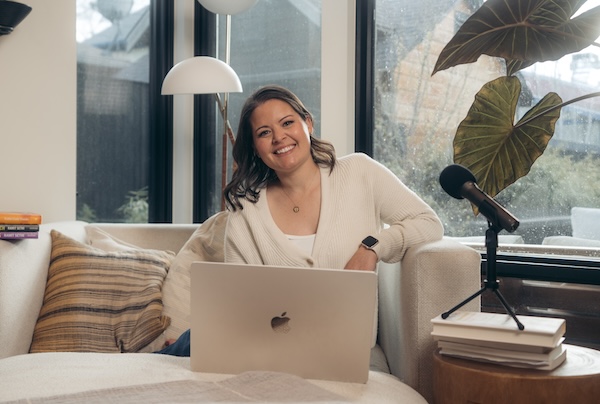
This article was adapted from an episode of the Build Wealth Podcast, where I share more of the stories behind these ideas and talk through how I've approached different financial seasons in my own life. If you're someone who likes learning on a walk, during your commute, or while folding laundry, I'd love to have you listen.
If you're facing a big financial decision...
Maybe you're wondering if you can afford to slow down. Maybe you're thinking about changing careers, starting a business, buying a home, or simply trying to figure out whether you're actually on track.
Those are exactly the conversations I have with clients during my 90-Minute Money Clarity & Decision Support Session. We'll look at your investments alongside your goals so you can understand what your money is making possible today, not just thirty years from now.
Because at the end of the day, that's really what this is all about.
Understanding your investments isn't about becoming obsessed with the stock market or memorizing financial jargon. It's about trusting yourself to make decisions that support the life you want to live. And I think every woman deserves to feel that kind of confidence.
Disclaimer
DISCLAIMER: Build Wealth with Katie is a brand of Miss Fund Your Freedom LLC. Katie Viola is a financial coach and educator—not a licensed financial advisor, accountant, therapist, or investment professional. All content is for educational purposes only and should not be considered personalized investment advice. You are responsible for your own financial decisions, and Miss Fund Your Freedom LLC assumes no liability for any outcomes.
